If a resident was willing to saddle up or hitch up the buggy, she or he could ride to town via Singer Hill, to the north. But, that wasn’t always convenient, and it was frustrating to have to schedule an hour or two and visit a livery stable just to get to a store a few blocks away. By 1912, the city residents decided they had to do something about it, to bring the two halves of the city together. It wasn’t just the convenience of the residents at the top, who wanted to get to town to shop; the city had outgrown that shelf of land and was starting to develop and spread out on the top. The two halves of Oregon City would have to be brought together somehow. 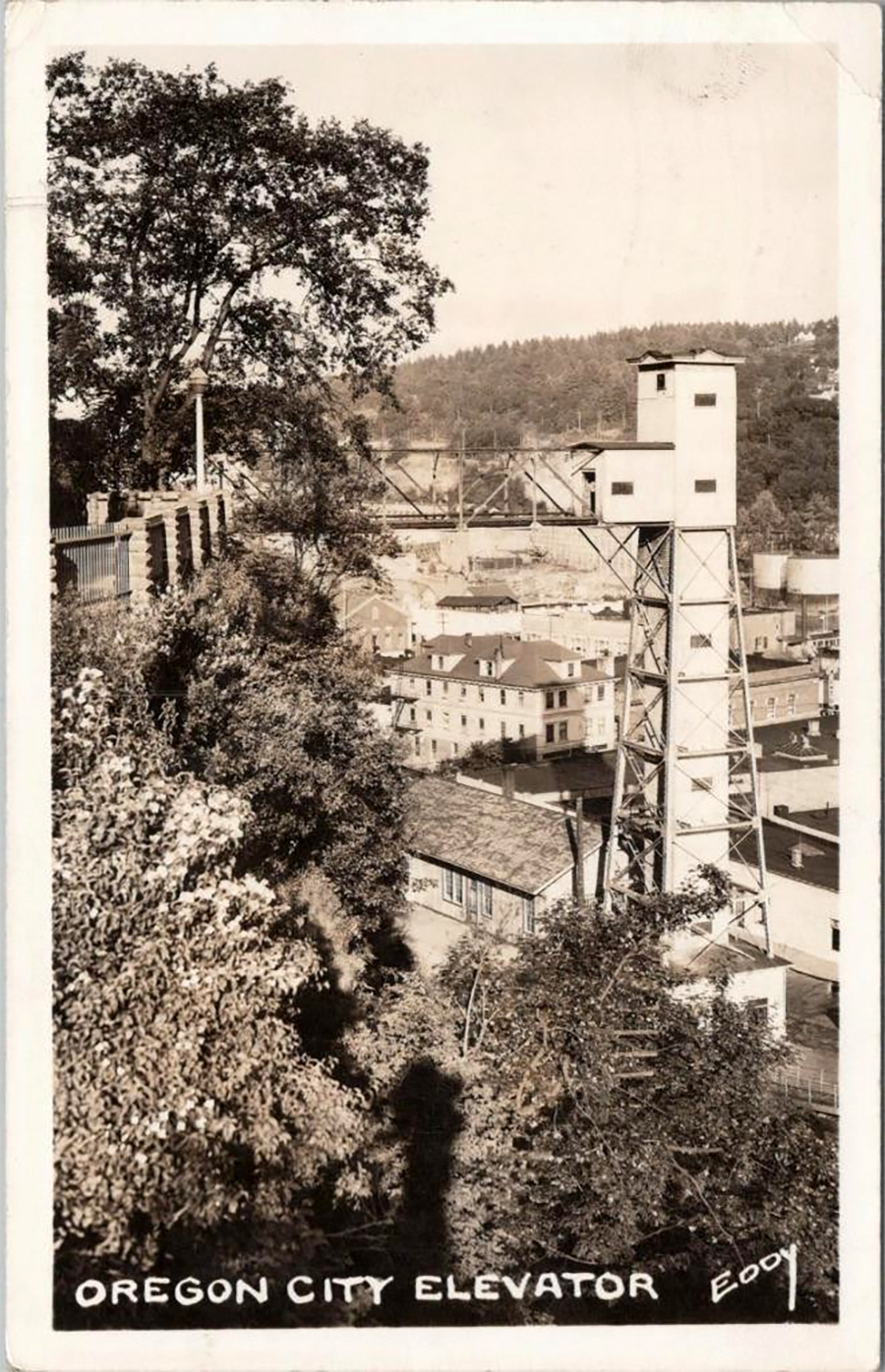
The old water-powered elevator as it appeared circa 1920, viewed from the promenade at the brow of the bluff. (Image: Postcard)So the city presented the townsfolk with a ballot measure to build an elevator at the bluff. The measure was shot down at first. But on their next try, it was approved, and the voters green-lit $12,000 in bonds to get the project done. This was a time of heavy competitive growth among Oregon cities, and as the “O.G.” of the lower Willamette, Oregon City was feeling a little hard pressed by upstarts like Gladstone and Milwaukie, not to mention Portland. There was a sense that the geography was holding Oregon City back, and they’d have to do something to stitch their divided town together. By the early 1910s, almost everyone agreed an elevator was needed; but almost everyone also felt that it should not be near their house. That was especially true of the wealthy and prominent families with homes at the top of the bluff, high enough above the railroad tracks to not be noisy and blessed with glorious vistas out over the valley and falls. These folks were especially adamant: “You’re not ruining MY view with that horrid thing!” Negotiations went nowhere, so finally the city had to pick a spot, at the end of Seventh Street, and start condemnation proceedings. The unlucky homeowner fought like a tiger, and the case went all the way up to the Supreme Court before being decided in the city’s favor. 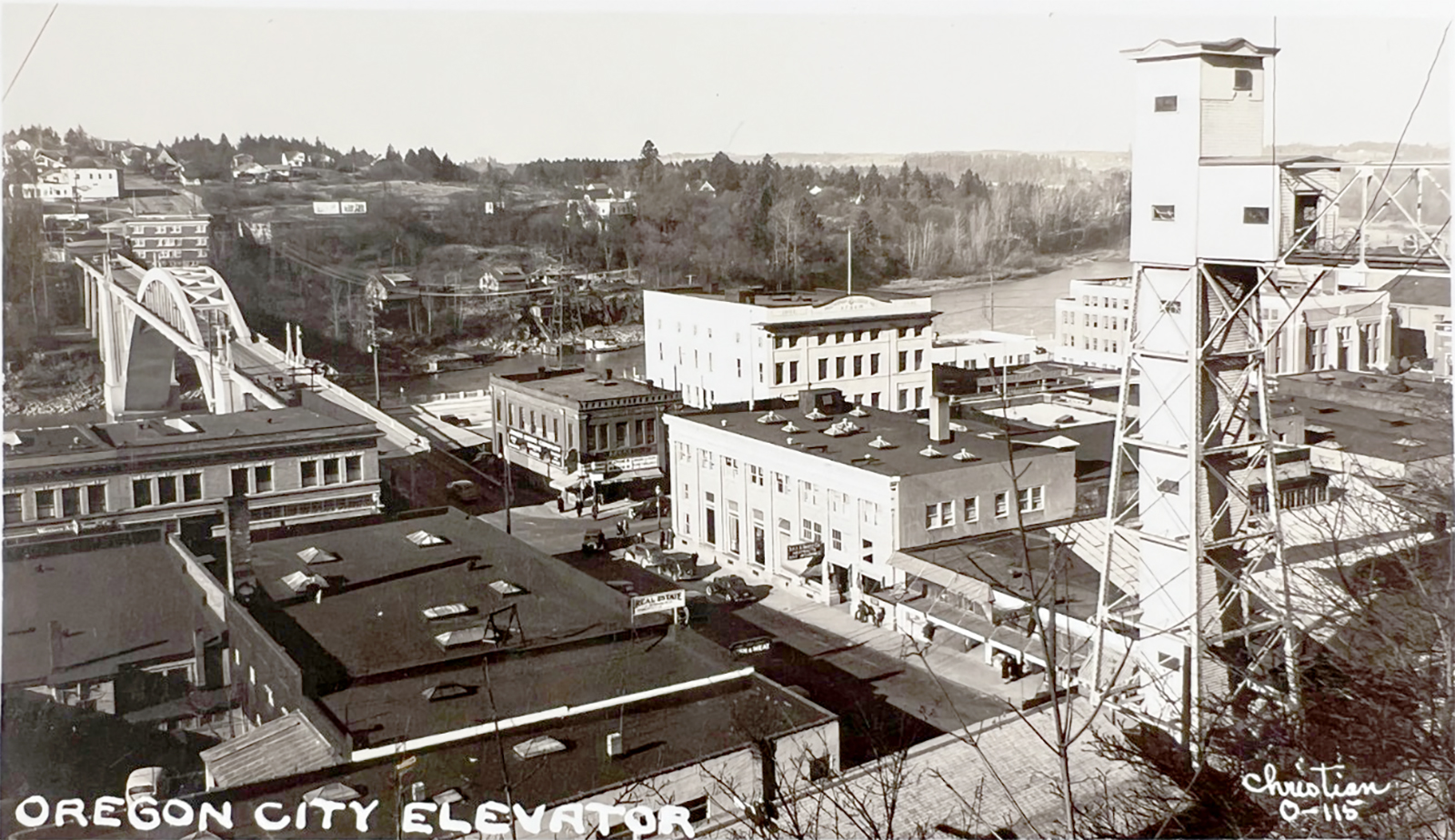
The old elevator as viewed from the cliffside, with the view of the city behind. (Image: Postcard)It seems to have left a bad taste in the homeowner’s mouth, though, because for the rest of her life she refused to ever ride in the elevator. That may have been for reasons other than petulance, though. By all accounts, riding the first Oregon City municipal elevator was a low-key terrifying experience. It consisted of a great free-standing tower of wood and steel that looked a bit like a slender grain elevator or maybe a wide church steeple, towering over the railroad tracks on the opposite side from the cliff face. Riders would get in the elevator and it would slowly start crawling upward. It was powered by water pressure, so it was excruciatingly slow — the climb of 100 feet or so took three to five minutes, so less than half the speed of a person climbing a ladder. Every now and then it would glitch out and stop; when that happened, riders would have to open a trap door in the floor and climb down to the ground along a narrow emergency ladder. If you did make it to the top of the old elevator, your adventure wasn’t over yet. There was a 35-foot catwalk stretching from the tower to the cliff face, over the railroad tracks. One imagines passengers trying not to look down, gripping the catwalk railing and mincing carefully along as smoke from a passing locomotive engine billows up around them ….
|
It wasn’t just the elevator’s riders who had reason to be dissatisfied with it. It took 200,000 gallons of water to move the elevator car from the bottom to the top, and every time the elevator started up the shaft the surrounding homes would lose some or all water pressure for the duration. This was less of an issue in those years before showers were common, but it was certainly an inconvenience on wash day. In spite of these drawbacks, the elevator got really popular. It was super convenient, and after one got used to the catwalk crossing over the railroad tracks and the slow lurching ride, it wasn’t so bad. It was crude and a little scary, but at least it wasn’t 700 steps or a trip to the livery stable! And the town was very proud of it. On its opening day, pretty much the whole city — population, at the time, 3,869 souls — came to queue up and take a ride. But locals were still a bit leery of it until 1924, when the city electrified it. In retrospect, it seems weird that they didn’t convert it to electricity earlier; Oregon City was, for obvious geological reasons, the first town in the West to have grid electric power, clear back in 1889 when the elevator was little more than a gleam in a deamer’s eye, if even that. 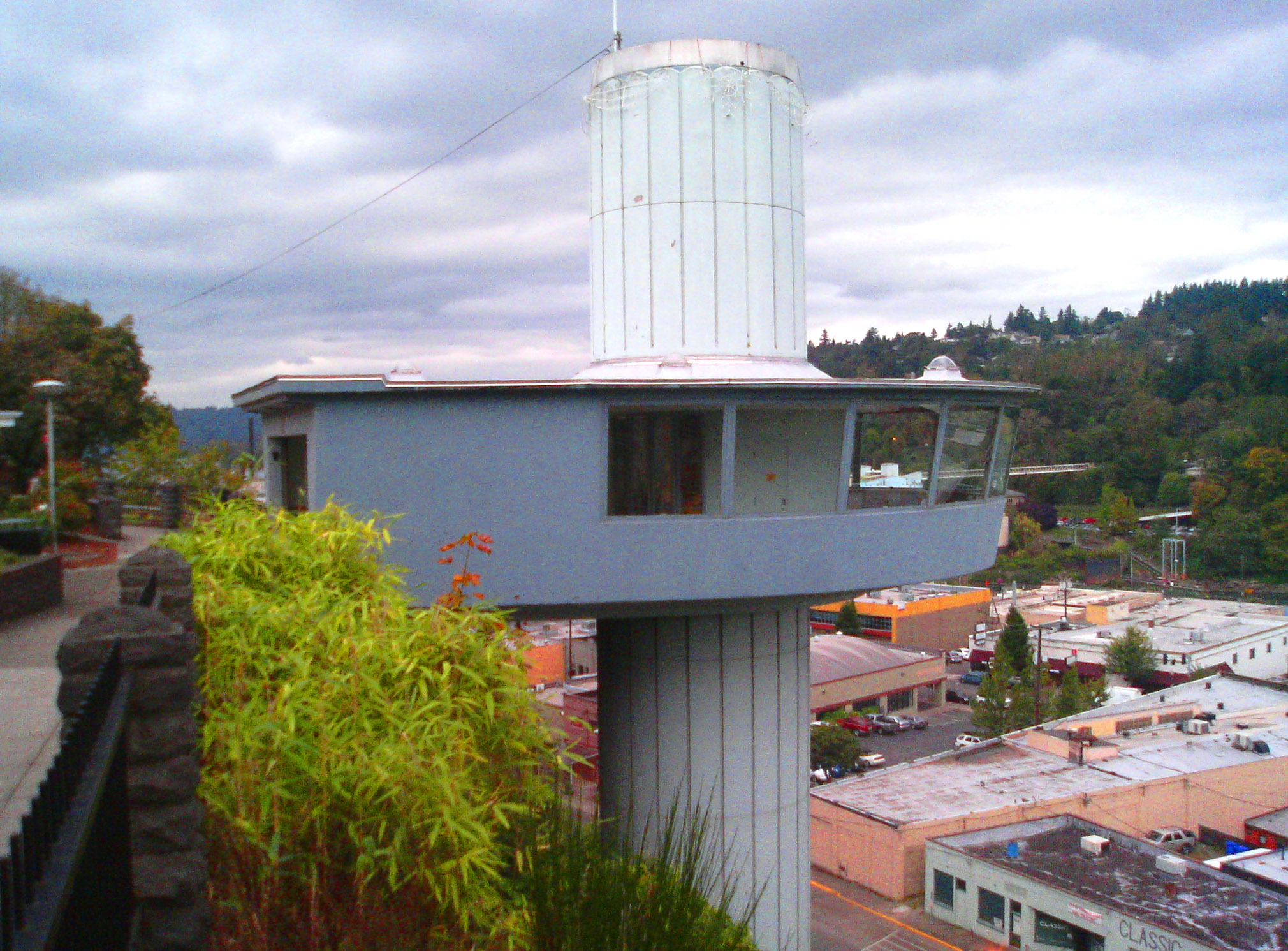
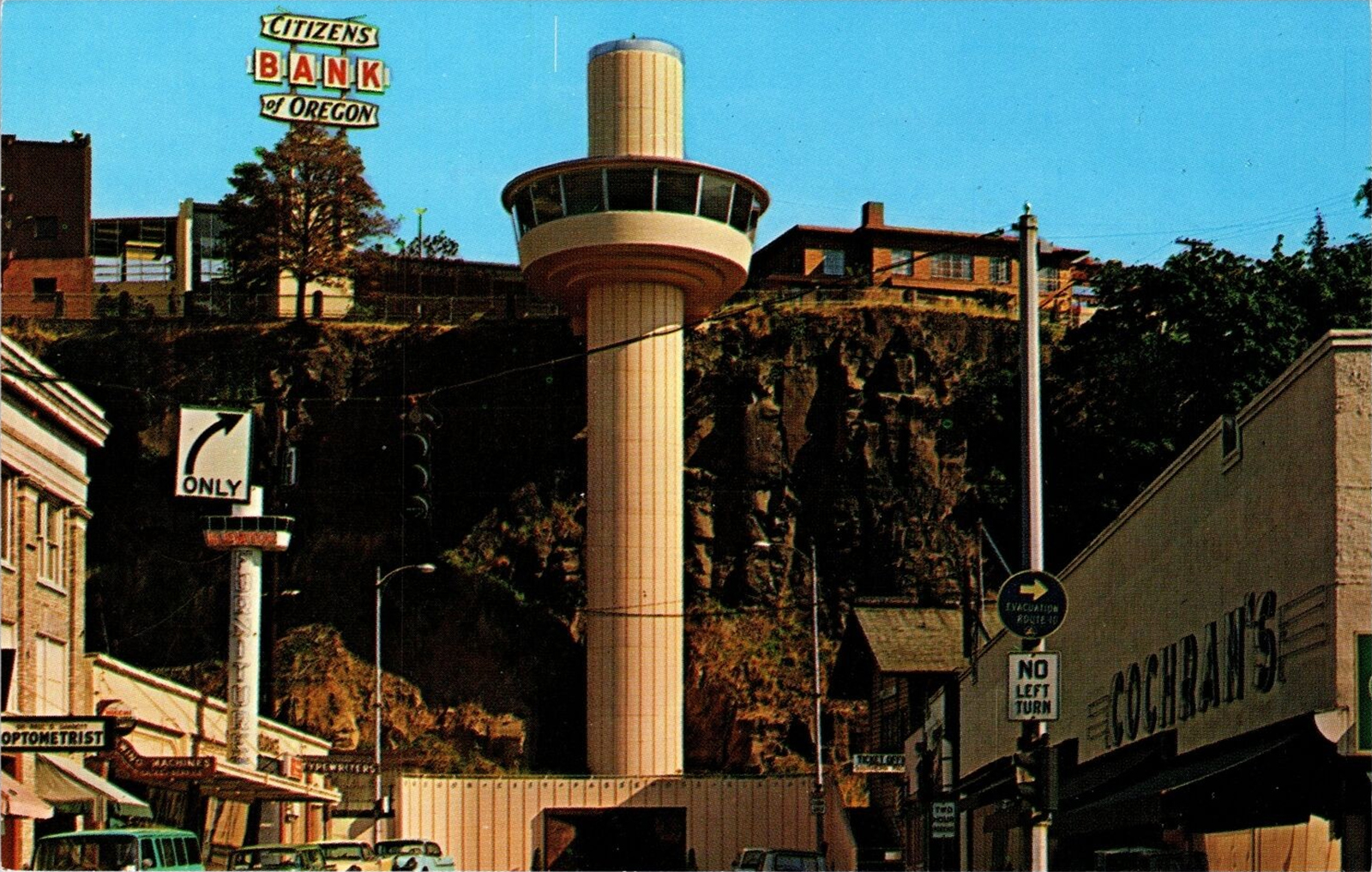
The observation deck at the top of the Oregon City Municipal Elevator, as seen from the promenade at the brow of the bluff. (Image: Staff)Better late than never, though, as they say; and with new electric drive motors in place, the car now zoomed from bottom to top in just 30 seconds — and they were far less dramatic seconds at that. Still, there was that catwalk to navigate; it was generously wide, but still, that was a long way down, and it must have been at least uncomfortable to traverse it. Plus, by the 1950s, the machinery was getting pretty long in the tooth, and breakdowns were starting to be more frequent. Given that an elevator breakdown was a prelude to a hair-raising climb down a narrow ladder, people were starting to avoid using it; plus, widespread adoption of automobiles had given most of them more comfortable alternatives anyway. So the city got approval for a replacement elevator, and put the project out for bids, specifying a plain, unadorned, timeless look. The low bid came in at $116,000; it was finished in time for the tourist season in 1955, and to say it wears its mid-century-modern architecture proudly would be an understatement! Perhaps the most important change was, the elevator was built with a tunnel at the bottom, which runs 35 feet under the railroad tracks. This enables the elevator tower to be anchored securely to the bluff rather than swaying like a skyscraper 100 feet above the city. It’s a vastly more pleasant (not to mention safer) experience than the old one was. Until the COVID-19 outbreak, the elevator was staffed with an attendant; but, since then, it’s been self-service. Riders walk into the tunnel at the end of Seventh Street, ride to the top, and can then continue east on Seventh Street if they want to, or stroll around the viewing platform and walk the promenade at the brow of the bluff. It’s really a very nice setup, and well worth a stop if you are ever in Oregon City with an hour or two to spare.
|