For decades, skeptics have scoffed. The effect of people’s heights changing has been ascribed to something called a “Ponzo illusion,” in which heavy chevron-shaped lines bracketing two identical figures cause the eye to perceive height differences in them. Also, without any horizon line or point of reference, it’s hard to really know for sure if that water really is flowing uphill in the House of Mystery. So, is the Oregon Vortex simply a monument to 80 years of psychological suggestion and expert illusioneering? Or is there really something unusual about the place? Could there be a real scientific basis for this pseudoscientific-sounding “force field” theory? 
The Mystery Shack as it appears in the Disney Channel show created by Alex Hirsch, inspired by the House of Mystery. (Image: Disney)Maybe the most compelling evidence that it’s not real, that it’s all an illusion, and that there is no “force field,” is the success of copycat attractions that have sprung up in places closer to tourist routes in the years since. These places replicate the general form of the House of Mystery, and the same effects happen there — which suggests that it's the shape of the shack that stars in the show, not its location relative to a magnetic force field. The first one of these copycats to be built was The Mystery Spot, down in Santa Cruz, in 1939 — at least, it was the first one to come to Lister’s attention. Litster sued its operator for copying his setup, but withdrew the suit when someone pointed out that one could not copyright natural phenomena. Over the subsequent 20 years, the landscape of North America became peppered with Gravity Hills, Magnetic Hills, Mystery Spots, (State Name) Vortexes, and similar tourist traps. 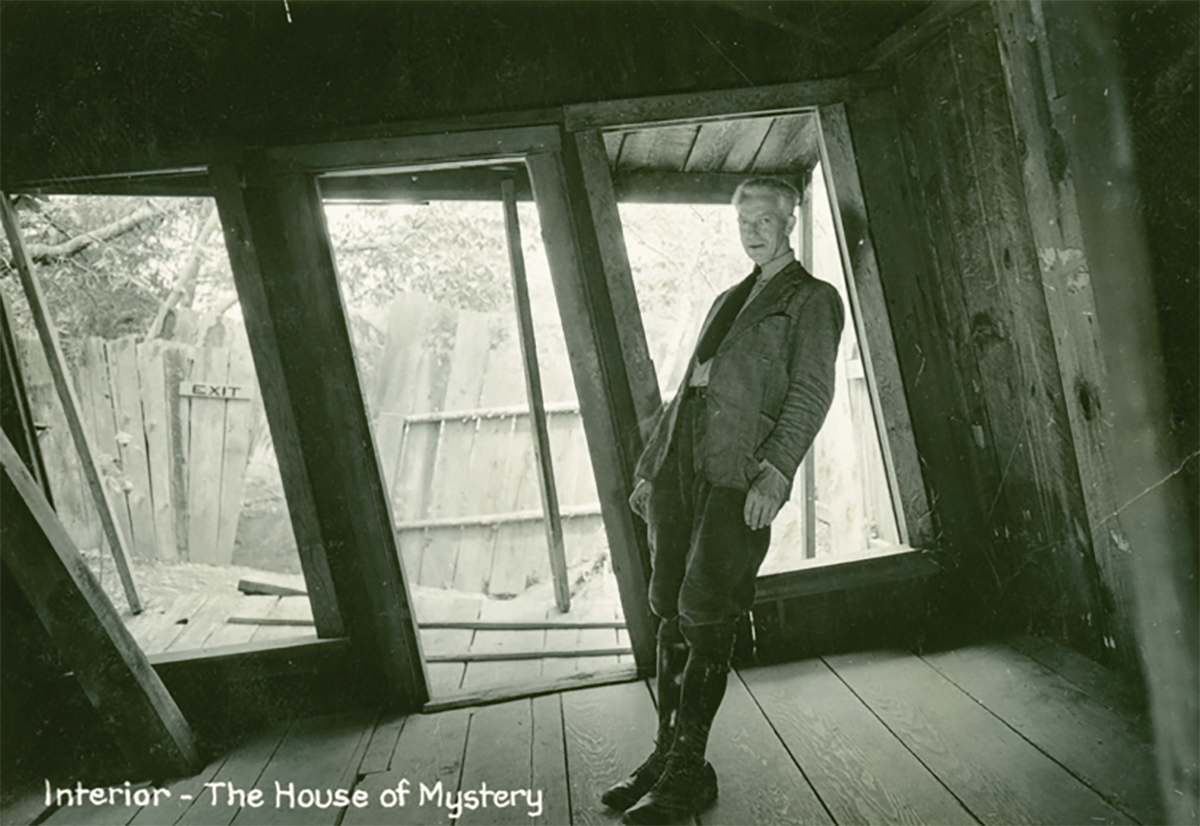
The interior of the House of Mystery. The man standing in the picture is probably John Litster. (Image: Oregon Historical Society)But there really is something special about the Oregon Vortex. “Tennis balls really do seem to roll uphill there,” writes RoadsideAmerica.com. “Brooms really do stand on end. After subjecting many spots to rigorous, very scientific tests, our Mystery Spot Test Kit indicates that the Oregon Vortex is the most disturbed.” 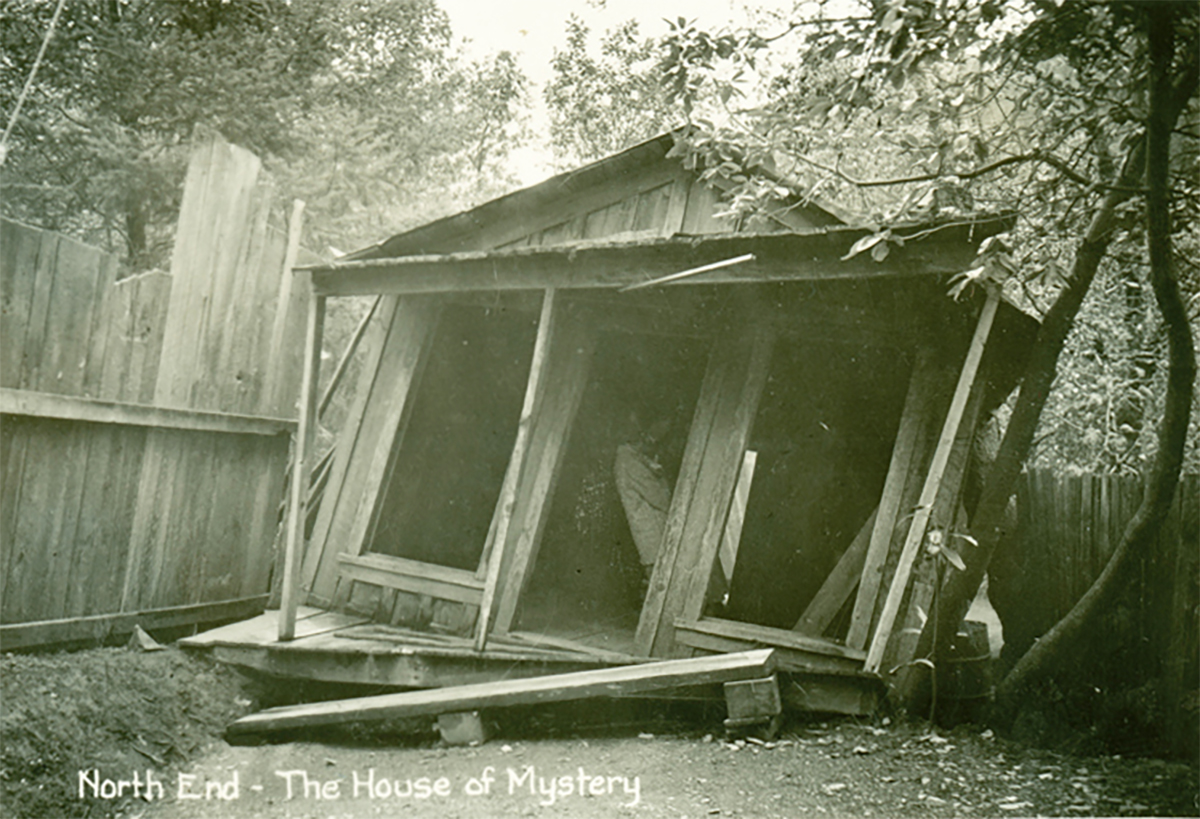
The House of Mystery as it appears from the north side. (Image: Oregon Historical Society)Also, the operators of the Vortex have pretty much always maintained an open-door policy to the skeptics. Photographs are encouraged; skeptical investigations meet with enthusiastic cooperation and even offers of free admission to the site while investigating.
|

Or maybe that openness is just part of the show. Either way, the place is a wonderful piece of Oregon history, and well worth checking out.
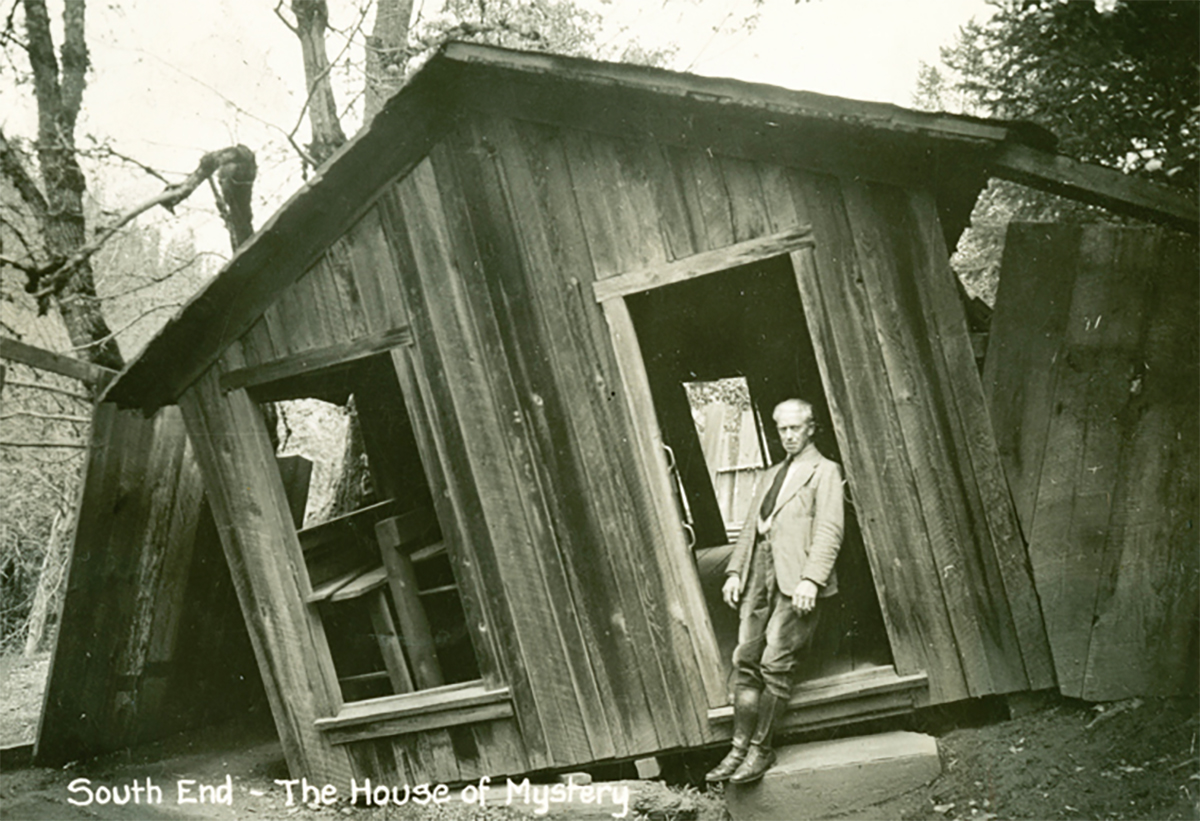
The House of Mystery as it appears from the south side. The man standing in front of it is probably John Litster himself. (Image: Oregon Historical Society)IF ONLY THIS story could end here, with a little encouragement to check out this historic and fascinating place. Unfortunately, in March of this year, at the beginning of the tourist season, Sardine Creek rose above its banks high enough to send millions of gallons of fast-flowing water pouring above the floors in the gift shop. Luckily, the water didn’t get high enough to duplicate whatever happened to the House of Mystery in 1914, but it made an enormous mess and inflicted thousands of dollars’ worth of damage on the historic building — and the property was not insured against flood damage. The operators tried to keep things going for the summer season, but in August they were forced to close it so that crews could work to save and repair the historic structures. But they were not able to get enough done by the end of the summer to allow them to re-open on their usual schedule, next March; and to preserve the salmon run in Sardine Creek (that would be the sardines, of course) they can’t run construction equipment again until June 2026. Everyone is hoping they can get it reopened soon, and that they can financially keep it together in the meantime (roadside attractions are famous for being run on a shoestring, even historical and world-famous ones). For anyone who wants to help, they have set up a GoFundMe campaign, which can be found through their Facebook page.
|